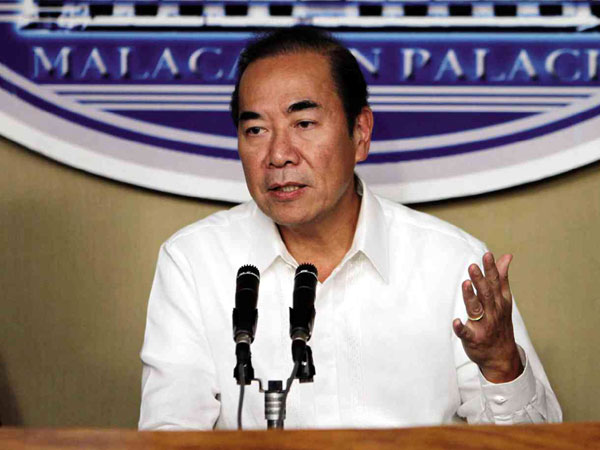
Wednesday, July 30, 2014

AC Enterprises, Inc. vs. Frabelle Properties Corp.

G.R. No. 166744. November 2, 2006.

SCRA Citation:  506 SCRA 625

DOCTRINE: Private and public nuisance; definition – The term “nuisance” is so comprehensive that it has been applied to almost all ways which have interfered with the rights of the citizens, either in person, property, the enjoyment of property, or his comfort; A private nuisance is one which violates only private rights and produces damage to but one or a few persons while a nuisance is public when it interferes with the exercise of public right by directly encroaching on public property or by causing a common injury, an unreasonable interference with the right common to the general public. In this case, the noise generated by an airconditioning system is considered a private nuisance.

Noise emanating from air-con units not nuisance per se – Noise becomes actionable only when it passes the limits of reasonable adjustment to the conditions of the locality and of the needs of the maker to the needs of the listener; Injury to a particular person in a peculiar position or of especially sensitive characteristics will not render the noise an actionable nuisance. Whether or not the noise is a nuisance is an issue to be resolved by the courts.

Test to determine noise as a nuisance – The test is whether rights of property, of health or of comfort are so injuriously affected by the noise in question that the sufferer is subjected to a loss [i.e. Actual Physical Discomfort]which goes beyond the reasonable limit imposed upon him by the condition of living, or of holding property, in a particular locality in fact devoted to uses which involve the emission of noise although ordinary care is taken to confine it within reasonable bounds; or in the vicinity of property of another owner who, though creating a noise, is acting with reasonable regard for the rights of those affected by it.

Action to abate private nuisance; incapable of pecuniary estiation – an action to abate private nuisance, even wehere the plaintiff asks for damages is one incapable of pecuniary estimation

FACTS: AC enterprises (Petitioner) is a corporation owns a 10-storey building in Makati City. Frabelle (Respondent) is a condominium corporation who's condominium development is located behind petitioner. Respondent complained of the 'unbearable” noise emanating from the blower of the air-conditioning units of petitioner.

ISSUES:
(1) Is it a nuisance as to be resolved only by the courts in the due course of proceedings or a nuisance per se?

(2) Is an action for abatement of a private nuisance, more specifically noise generated by the blower of an air-conditioning system, even if the plaintiff prays for damages, one incapable of pecuniary estimation?

(3) What is the determining factor when noise alone is the cause of complaint?

HELD:
(1) It is a nuisance to be resolved only by the courts in the due course of proceedings; the noise is not a nuisance per se. Noise becomes actionable only whenn it passes the limits of reasonable adjustment to the conditions of the locality and of the needs of the maker to the needs of the listener. Injury to a particular person in a peculiar position or of especially sensitive characteristics will not render the house an actionable nuisance–– in the conditions, of present living, noise seems inseparable from the conduct of many necessary occupations.

(2) Yes, the action is one incapable of pecuniary estimation because the basic issue is something other than the right to recover a sum of money.


(3) The determining factor is not its intensity or volume; it is that the noise is of such character as to produce actual physical discomfort and annoyance to a person of ordinary sensibilities rendering adjacent property less comfortable and valuable.

Wednesday, July 16, 2014

PRESIDENT DOES NOT NEED TO DEFEND DAP


Last July 14, 2014, President Aquino, reacting to the declaration of his Disbursement Acceleration Program as unconstitutional by the Supreme Court gave a national address basically saying that:

1.  The Supreme Court justices were being unreasonable
2.  DAP is legal.
3.  DAP benefits the people.
4.  DAP is necessary

I'm sure that by now everyone has an opinion regarding this issue.

Now these arguments have been discussed in other blogs and newspaper opinions and I don't think its worth discussing here because I have a different argument as to why the President should never have defended the DAP in the first place:

The DAP has already been discontinued it is a moot and academic issue

One of the procedural issues raised by the Government in Araullo vs. Abad is that the DAP case should no longer be decided because it is moot and academic.  Being moot and academic is an argument often brought to the court, invoking judicial conservatism and hesitation to decide a case because a controversy no longer exists.  It is the first of four requisites that needs to be complied with in order that the Supreme Court can exercise its power of judicial review.

On page 21 of the Decision, the Solicitor General claims that:


DAP as a program, no longer exists, thereby mooting these present cases brought to challenge its constitutionality. Any constitutional challenge should no longer be at the level of the program, which is now extinct, but at the level of its prior applications or the specific disbursements under the now defunct policy. We challenge the petitioners to pick and choose which among the 116 DAP projects they wish to nullify, the full details we will have provided by February 5. We urge this Court to be cautious in limiting the constitutional authority of the President and the Legislature to respond to the dynamic needs of the country and the evolving demands of governance, lest we end up straightjacketing our elected representatives in ways not consistent with our constitutional structure and democratic principles. (footnotes omitted)

Of course, the Supreme Court did not believe this claiming that the case should be decided since the DAP is capable of being repeated and yet evading review.

Basically what I am saying now is that the President at first wanted the court not to decide on the case because it was now moot and academic.  Now that the court ruled on its constitutionality, the previously alleged moot and academic issue is now being forced down people's throats--probably for no other reason than that the President merely wants to cover his a$$ and that of his erring subordinates.

At the supreme court he says:  "Please don't decide on the DAP anymore, we've discontinued it already.  It has done its job."

Before the people he says:  "the Supreme Court is wrong!  DAP is not unconstitutional, we need DAP."

The President, through his alter ego Butch Abad and the Office of the Solicitor General is not being candid to the Supreme Court:  He cannot claim before the Court that he discontinued the program and won't pursue it any longer and now declare to the people that he wants the decision reconsidered because he thinks DAP is constitutional and that the people need it (as was implied in the July 14, 2014 speech).

So basically, what I am saying is that the President wasted our time and ruined his credibility by giving that palengkero speech of his defending a program that he had discontinued months before and even going through the trouble of hiring Atty. Raissa Robles to find a loophole for it, and he continues to waste our time claiming that he needs DAP to continue implementing his projects and his "reforms."  What a guy!

Update 7/18/14
Now, the government is appealing to the people about how the government needs to continue the DAP program with news items like, DPWH stops P5B flood-control work.  The news report in part reads:


Public Works Secretary Rogelio Singson: No choice. FILE PHOTO
MANILA, Philippines–The Department of Public Works and Highways (DPWH) has 
put on hold some P5 billion worth of high-impact, flood-control projects funded by the Disbursement Acceleration Program (DAP), which the Supreme Court has declared unconstitutional.
Public Works Secretary Rogelio Singson on Thursday said that “with the Supreme Court ruling, I have no choice [but to temporarily shelve the projects] until a supplemental budget is passed to implement them, particularly those that have yet to be started.”
He stressed the need to resume work on the flood-control projects, which he said were among the agency’s priority infrastructure programs.


Read more: http://newsinfo.inquirer.net/620983/dpwh-stops-p5b-flood-control-work#ixzz37o3NfdgM
Follow us: @inquirerdotnet on Twitter | inquirerdotnet on Facebook


Obviously then, the DPWH cannot just now cancel these projects because by Abad's and the OSG's own admission, the DAP was cancelled way back in 2013. Articles such as these are deliberately misleading, if not in fact blatant lies.

End of update

Also, noted blogger Ilda, tweeted this a couple of hours ago:


The President should have just stuck to his guns:  claim good faith; say that the program was discontinued in good faith; and not to repeat the same in good faith.  Just as it had declared in the supreme court that the program is discontinued and that they will not repeat the same.  Perhaps the Supreme Court did not sense "good faith" when Abad and the Solicitor General brought the argument of mootness before it.

To Conclude 
If the President claimed the DAP moot and academic before the Supreme Court, it should likewise be moot and academic before his bosses.  He should stop shoving it down our throats.  He discontinued the program on his own and he did not need the Supreme Court to do it for him.  He is obviously just looking for a scapegoat and throwing a tantrum because his popularity ratings declined.

Thank you for your patience.


Don't be stupid be a smarty, come and join the lib'ral party

(photo courtesy of www.journal.com.ph)

Thursday, July 10, 2014

AFFIDAVIT OF DISCREPANCY

Its very inconvenient if your birth certificate contains a clerical error.  You could try to correct that, which should be a quickie administrative job as provided for under R.A. No. 9048, amended by R.A. No. 10172.  However the implementing rules provide, in Rule 8.2.1 et seq. requirements like publication, NBI clearance etc. which are clearly too onerous for a majority of purposes.  So in case an agency or employer or school would want to make sure that you-are-who-you-say-you-are, it should be sufficient that you present to them an affidavit of discrepancy.  An affidavit is by definition a sworn statement or oath.  It is also a public document.  So if you lie in an affidavit, that is a crime.

So here is a sample affidavit of someones whose gender was not indicated in his birth certificate:


REPUBLIC OF THE PHILIPPINES )
QUEZON CITY ) S.S.

AFFIDAVIT OF DISCREPANCY IN SEX

I, JUAN B. DOE, male, of legal age, single, and with address at ___________________________, under oath, state:


1.    THAT  my name is  JUAN B. DOE as stated and registered in my birth certificate issued by office of the Civil Registry of ________________. A copy of my birth certificate is hereto attached as ANNEX “A”;

2. THAT the entry for “SEX” does not indicate whether I am a male or a female.

3.    THAT since birth, my natural and biological gender has always been MALE and that I am identified as a male by my family, friends, acquaintances and by the community;

4.    THAT the sex of herein Affiant is MALE and that the birth certificate referring to herein Affiant does not indicate whether he is a male or female, hence there is a discrepancy;

5.    THAT I am executing this Affidavit to attest to the truth of the foregoing facts and to use the same for whatever legal purpose it may serve.

IN WITNESS WHEREOF, I hereunto affix my signature this ___ (date)___ at Quezon City.
                                                                     

  JUAN B. DOE
                                                                                          Affiant

SUBSCRIBED AND SWORN to before me this _____(date)__________ at Quezon City, Affiant exhibiting to me his ___________________________ ______________________(Gov't ID details)____________________


Doc No. ________;
Page No. _______ ;
Book No. _______;
Series of _______.


Saturday, June 28, 2014

Vda. DE BATACLAN vs. MEDINA


FACTS:
Medina is the owner and operator of a bus. This bus, on Sept. 13, 1952 around 2:00AM somewhere in Imus, Cavite, crashed and fell into a ditch. Apparently, its front tire burst, zig-zagged and turned turtle into the ditch. Bataclan was one of the 18 passengers. Most of the passengers were able to get out, but Bataclan and 3 others were trapped. It appears that the bus drivers and the passengers who already got out did not try to help Bataclan et al get out, instead, about 10 of the locals in the area came to their aid, they were carrying a burning torch for illumination, but then a fierce fire started and engulfed the bus and killed Bataclan et al. It appears that there was a gas leak from the bus and it caught fire from the torch the would-be rescuers were using.

The heirs of Bataclan sued Medina.

The trial court found that there was a breach of a contract of carriage where Medina undertook to take Bataclan to his destination safely. The trial court also found that there was negligence on the part of Medina since at the time of the blow-out, the bus was speeding. There is no question that under the circumstances, the defendant carrier is liable. The only question is to what degree. The trial court argued that Medina is only liable for the injuries suffered by Bataclan and not by his death, the proximate cause of which was the fire, which was not caused by Medina.

ISSUE: Whether or not it was the negligence of Medina, owner of the bus company, which was the proximate cause of the death of Bataclan.

HELD:
Yes. In this case, the proximate cause of the death was the overturning of the bus, because of the overturning, it leaked gas which is not unnatural or unexpected. The locals coming to the aid of the trapped passengers was most likely because the driver and the conductor went out looking for help. It is only natural that the would-be rescuers bring with them a torch because it was 2:30AM and the place was unlit. The fire could also be attributed to the bus driver and conductor because he should have known, from the circumstances, and because he should have been able to smell gasoline and therefore he should have warned the rescuers not to bring the torch. Said negligence on the part of the agents of the carrier come under the codal provisions above-reproduced, particularly, Articles 1733, 1759 and 1763.


Proximate Cause – “‘that cause, which, in natural and continuous sequence, unbroken by any efficient intervening cause, produces the injury, and without which the result would not have occurred.’ And more comprehensively, ‘the proximate legal cause is that acting first and producing the injury, either immediately or by setting other events in motion, all constituting a natural and continuous chain of events, each having a close causal connection with its immediate predecessor, the final event in the chain immediately effecting the injury as a natural and probable result of the cause which first acted, under such circumstances that the person responsible for the first event should, as an ordinarily prudent and intelligent person, have reasonable ground to expect at the moment of his act or default that an injury to some person might probably result therefrom.’”

Keep your Promise PNOY: DAR must stick to the deadline for Hacienda Luisita Distribution

I write this blog entry just two days before the date set for the completion of the distribution of Hacienda Luisita to the farmer-beneficiaries. As of this writing, the pace of the distribution still seems very sluggish. Even today—at the eleventh hour—the government still seems determined not to meet its deadline.

It seems that every excuse has been offered: From fortuitous events such as Typhoon Santi which hit last year and to it not being the “end of the world”,* should the deadline not be met, though we should already take this as an admission that the DAR is simply not up to the task of distributing the land.

Why is this date so important? Thats because that is the date when R.A. No. 9700, the CARPER law is set to “expire”. And by expire, I mean that all funding will cease since by then all the land was supposed to have been distributed.** When this funding ceases, practically all the work left to do comes to a complete standstill. Its a situation of “finished-or-not-finished” all work will cease, or rather a case of statutorily granted funds being replaced with discretionary funds.  A possible remedy of course would be to pass a new law extending CARPER, but its highly unlikely given the current PDAF imbroglio in the senate which has effectively reduced the quorum in the Senate and kept whoever is left on their toes.

This date is also significant because it marks the President's commitment to land reform—it was one of Noynoy Aquino's campaign promises in the 2010 elections. A failure here would be a very personal one for Aquino.

Hacienda Luisita was a large landholding that once belonged to the Aquino Family—the family where the Philippines' current President belongs to. It is a land over which much blood has been spilled. In fact, a massacre and some related killings happened there in 2005. This was around the time that the Aquino-Cojuangcos were trying to implement a stock distribution option (SDO) with the farmers instead of physically handing over the land to them.

It was R.A. No. 9700, which was passed in 2009 which practically abolished the giving of stocks instead of land to the farmers. And HLI vs. Luisita Industrial Park Corporation which revoked the original Stock Distribution Plan. A highly credible conspiracy theory exists whereby it is claimed that President Aquino and the Aquino-Cojuangco clan are waging a secret vendetta against the Former President Gloria Macapagal-Arroyo, under whose administration R.A. No. 9700 was signed; and against Former Chief Justice Corona, under whose court HLI vs. Luisita was promulgated, which led to the Former Chief Justice's impeachment and the Former President's arrest.

It is with this political backdrop that we hope and wait that the President, through his Agency the Department of Agrarian Reform finally finish distributing the land to the farmer-beneficiaries in time for the June 30, 2014 deadline set under the CARPER law.

Update 7/21/14

The latest controversy regarding the DAP may involve this now-defunct CARPER Law.  According to an anonymous letter to the editor published by the Manila Times last July 19, 2014:


DAP and DAR

DAR made full page announcements in the leading dailies that notwithstanding the expiry of our Agrarian laws as of June 30, 2014. DAR still did not end because under Sec. 30.*** “pending cases or proceedings” may still be continued. And so DAR made midnight notices of coverage by publication (not by personal service nor by registered mail as required) so as to cover more lands.

DAR says that it has enough savings and can therefore go on and acquire new lands. They better read the latest Supreme Court decision declaring the acts of Budget Secretary Abad and President Aquino as “unconstitutional” This is because they used or transferred “savings” to finance projects without the proper appropriation law. The court effectively went back to the old doctrine when a budget has not been used up for a certain purpose, the saving goes back to the government to be appropriated properly and not by the Executive branch which implemented projects. Without a new law how can there be an appropriation of savings? Cross-Border to the DAR? Equally illegal.


What this letter confirms is my fears that if the deadline wasn't met for the Hacienda Luisita distribution, it will most likely never be accomplished given the expiry of CARPER and that funds shall cease to be allocated to it from now on.

References:

Here is a piece in 2009 when CARPER still held much hope and promise:
http://opinion.inquirer.net/viewpoints/columns/view/20090622-211874/CARPER-Latest-Chapter-in-Agri-Reform-Battle

The farmers are obviously displeased:
http://newsinfo.inquirer.net/615626/farmers-mark-end-of-carper-with-protests

Kris Aquino on fire and the target of hate:
http://www.gmanetwork.com/news/story/358403/news/nation/you-can-burn-me-anytime-you-want-kris-to-hacienda-luisita-farmers

*Hardly an excuse in any case.

** Section 21. Section 63 of Republic Act No. 6657, as amended, is hereby further amended to read as follows:
“SEC. 63. Funding Source. - The amount needed to further implement the CARP as provided in this Act, until June 30, 2014, upon expiration of funding under Republic Act No. 8532 and other pertinent laws, shall be funded from the Agrarian Reform Fund and other funding sources in the amount of at least One hundred fifty billion pesos (P150,000,000,000.00).
“Additional amounts are hereby authorized to be appropriated as and when needed to augment the Agrarian Reform Fund in order to fully implement the provisions of this Act during the five (5)-year extension period.
x x x x”

***SECTION 30. Resolution of Cases. — Any case and/or proceeding involving the implementation of the provisions of Republic Act No. 6657, as amended, which may remain pending on June 30, 2014 shall be allowed to proceed to its finality and be executed even beyond such date.


Monday, June 23, 2014

RAMOS vs. COURT OF APPEALS

G.R. No. 124354. December 29, 1999.

Ponente: Kapunan

FACTS:
Erlinda Ramos underwent a surgical procedure to remove stone from her gall bladder (cholecystectomy). They hired Dr. Hosaka, a surgeon, to conduct the surgery at the De Los Santos Medical Center (DLSMC). Hosaka assured them that he would find a good anesthesiologist. But the operation did not go as planned, Dr. Hosaka arrived 3 hours late for the operation, Dra. Gutierrez, the anesthesiologist “botched” the administration of the anesthesia causing Erlinda to go into a coma and suffer brain damage. The botched operation was witnessed by Herminda Cruz, sister in law of Erlinda and Dean of College of Nursing of Capitol Medical Center.

The family of Ramos (petitioners) sued the hospital, the surgeon and the anesthesiologist for damages. The petitioners showed expert testimony showing that Erlinda's condition was caused by the anesthesiologist in not exercising reasonable care in “intubating” Erlinda. Eyewitnesses heard the anesthesiologist saying “Ang hirap ma-intubate nito, mali yata ang pagkakapasok. O lumalaki ang tiyan.”

Diagnostic tests prior to surgery showed that Erlinda was robust and fit to undergo surgery.

The RTC held that the anesthesiologist ommitted to exercise due care in intubating the patient, the surgeon was remiss in his obligation to provide a “good anesthesiologist” and for arriving 3 hours late and the hospital is liable for the negligence of the doctors and for not cancelling the operation after the surgeon failed to arrive on time. The surgeon, anesthesiologist and the DLSMC were all held jointly and severally liable for damages to petitioners. The CA reversed the decision of the Trial Court.

ISSUES: Whether or not the private respondents were negligent and thereby caused the comatose condition of Ramos.

HELD:
Yes, private respondents were all negligent and are solidarily liable for the damages.

RATIO:

Res ipsa loquitur – a procedural or evidentiary rule which means “the thing or the transaction speaks for itself.” It is a maxim for the rule that the fact of the occurrence of an injury, taken with the surrounding circumstances, may permit an inference or raise a presumption of negligence, or make out a plaintiff’s prima facie case, and present a question of fact for defendant to meet with an explanation, where ordinarily in a medical malpractice case, the complaining party must present expert testimony to prove that the attending physician was negligent.

This doctrine finds application in this case. On the day of the operation, Erlinda Ramos already surrendered her person to the private respondents who had complete and exclusive control over her. Apart from the gallstone problem, she was neurologically sound and fit. Then, after the procedure, she was comatose and brain damaged—res ipsa loquitur!—the thing speaks for itself!

Negligence – Private respondents were not able to disprove the presumption of negligence on their part in the care of Erlinda and their negligence was the proximate cause of her condition. One need not be an anesthesiologist in order to tell whether or not the intubation was a success. [res ipsa loquitur applies here]. The Supreme Court also found that the anesthesiologist only saw Erlinda for the first time on the day of the operation which indicates unfamiliarity with the patient and which is an act of negligence and irresponsibility.

The head surgeon, Dr. Hosaka was also negligent. He failed to exercise the proper authority as the “captain of the ship” in determining if the anesthesiologist observed the proper protocols. Also, because he was late, he did not have time to confer with the anesthesiologist regarding the anesthesia delivery.

The hospital failed to adduce evidence showing that it exercised the diligence of a good father of the family in hiring and supervision of its doctors (Art. 2180). The hospital was negligent since they are the one in control of the hiring and firing of their “consultants”. While these consultants are not employees, hospitals still exert significant controls on the selection and termination of doctors who work there which is one of the hallmarks of an employer-employee reationship. Thus, the hospital was allocated a share in the liability.


Damages – temperate damages can and should be awarded on top of actual or compensatory damages in instances where the injury is chronic and continuing.

LRT vs. NAVIDAD

G.R. No. 145804. February 6, 2003


FACTS:
Navidad was drunk when he entered the boarding platform of the LRT. He got into an altercation with the SG Escartin. They had a fistfight and Navidad fell onto the tracks and was killed when a train came and ran over him.

The Heirs of Navidad filed a complaint for damages against Escartin, the train driver, (Roman) the LRTA, the Metro Transit Organization and Prudent Security Agency (Prudent). The trial court found Prudent and Escartin jointly and severally liable for damages to the heirs. The CA exonerated Prudent and instead held the LRTA and the train driver Romero jointly and severally liable as well as removing the award for compensatory damages and replacing it with nominal damages.

The reasoning of the CA was that a contract of carriage already existed between Navidad and LRTA (by virtue of his havA ing purchased train tickets and the liability was caused by the mere fact of Navidad's death after being hit by the train being managed by the LRTA and operated by Roman. The CA also blamed LRTA for not having presented expert evidence showing that the emergency brakes could not have stopped the train on time.

ISSUES:

(1) Whether or not LRTA and/or Roman is liable for the death.
(2) Whether or not Escartin and/or Prudent are liable.
(3) Whether or not nominal damages may coexist with compensatory damages.

HELD:
(1) Yes. The foundation of LRTA's liability is the contract of carriage and its obligation to indemnify the victim arising from the breach of that contract by reason of its failure to exercise the high diligence required of a common carrier.
(2) Fault was not established. Liability will be based on Tort under Art. 2176 of the New Civil Code.
(3) No.  It is an established rule that nominal damages cannot co-exist with compensatory damages.

RATIO:

Liability of LRTA – Read Arts. 1755,1756, 1759 and 1763 of the New Civil Code

A common carrier is required by these above statutory provisions to use utmost diligence in carrying passengers with due regard for all circumstances. This obligation exists not only during the course of the trip but for so long as the passengers are within its premises where they ought to be in pursuance to then contract of carriage.

Art. 1763 renders a common carrier liable for death of or injury to passengers (a) through the negligence or wilful acts of its employees or (b) on account of willful acts or negligence of other passengers or of strangers if the common carrier’s employees through theexercise of due diligence could have prevented or stopped the act or omission. In case of such death or injury, a carrier is presumed to have been at fault or been negligent, and by simple proof of injury, the passenger is relieved of the duty to still establish the fault or negligence of the carrier or of its employees and the burden shifts upon the carrier to prove that the injury is due to an unforeseen event or to force majeure.

Liability of Security Agency – If Prudent is to be held liable, it would be for a tort under Art. 2176 in conjunction with Art. 2180. Once the fault of the employee Escartin is established, the employer, Prudent, would be held liable on the presumption that it did not exercise the diligence of a good father of the family in the selection and supervision of its employees.


Relationship between contractual and non-contractual breach – How then must the liability of the common carrier, on the one hand, and an independent contractor, on the other hand, be described? It would be solidary. A contractual obligation can be breached by tort and when the same act or omission causes the injury, one resulting in culpa contractual and the other in culpa aquiliana, Article 2194 of the Civil Code can well apply. In fine, a liability for tort may arise even under a contract, where tort is that which breaches the contract. Stated differently, when an act which constitutes a breach of ontract would have itself constituted the source of a quasi-delictual liability had no contract existed between the parties, the contract can be said to have been breached by tort, thereby allowing the rules on tort to apply.

Nominal Damages - The award of nominal damages in addition to actual damages is untenable. Nominal damages are adjudicated in order that a right of the plaintiff, which has been violated or invaded by the defendant, may be vindicated or recognized, and not for the purpose of indemnifying the plaintiff for any loss suffered by him. It is an established rule that nominal damages cannot co-exist with compensatory damages.  The award was deleted/\.