Showing posts with label economic. Show all posts

Wednesday, November 15, 2017

POSITIVE AFFIRMATION: MAHINDRA CARS RECEIVE PRAISE FROM DUTERTE

I have been outspoken in my defense and praise of Indian automobiles.  Several articles on this blog have praised the Indian companies Tata and Mahindra. I have claimed that Indian cars are a very good fit for Philippine roads.  Specifically, I wrote:

On toughness and durability, Indian roads are some of the worst in the world.  I bet their traffic is horrible, the roads are in disrepair.  Their cars have to face extremes of heat and cold, they have to be able to climb steep mountain passes and navigate a maze of urban slums.  An Indian car has to be tough to go through that and simple--you can fix it "with a brick and a piece of string" and a hammer.


x x x

Furthermore, China does not really use diesel engines in their cars (trucks like the Foton Blizzard and the JBC are exceptions), but the Indians love diesel…”


When a PNP acquisition of Mahindra Patrol Cars came under fire from Senator Grace Poe back in 2014 for supposedly being overpriced and anomalous, I immediately jumped to their defense saying:

[T]he major concern with people is that Mahindra is an untested brand.  It has no track record in the Philippines and that it is likely to cost longer in the long run.

There is fear that a Mahindra would not last in PNP service. I beg to differ. Mahindra has been making military vehicles for a long time. The Indians have been using Mahindras for the police … they should be ideal cars for our PNP.”


0429Mahindra2


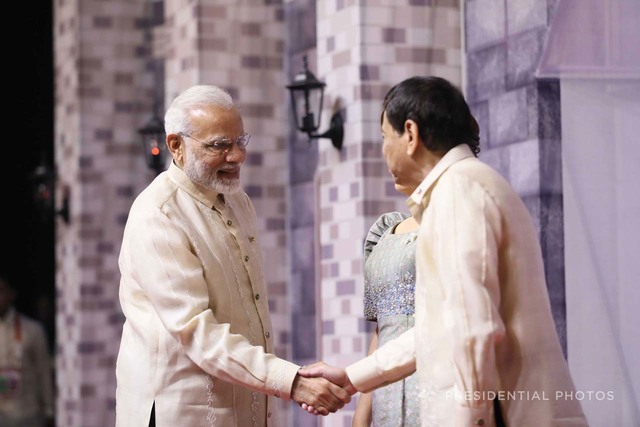
So now, during this week’s ASEAN and related Summits, we finally have affirmation from the President himself.  Earlier this week, November 13, 2017, he met with the Indian Prime Minister Narendra Modi and he allegedly told him:

The (Philippine) National Police is using Mahindra. It's one that's being used and there are a lot of them. I think there are almost 1,000 new (vehicles) and it's good. It's being used now. They are outside, they are guarding this place”

President Duterte and Indian Prime Minister Narendra Modi (source:  Rappler)

So I now feel fully vindicated in my defense of this brand.  Not only are the PNP satisfied with the longevity of these vehicles, some of which have been continuously on the road since 2014, but whose reliability has caught the attention of the President himself and had done its job of guarding foreign dignitaries attending the ASEAN and related summits without incident.


So the question remains:  Will this finally cement the reputation of Mahindra as a reputable brand of tough and rugged vehicles? That remains to be seen.

Sunday, May 7, 2017

WILL DEMOCRACY LEAD TO DEVELOPMENT IN THE PHILIPPINES?

[Note: This is an essay I wrote for university around 2009 or 2010. This would explain the ancient sources. Nevertheless, I believe that the topic this deals with is timeless and that a resolution has not yet been achieved, and so, this is my take. I have edited this for clarity and grammar, and to address points which my professor wrote in the margins of the paper.]

The question of whether democracy leads to development or is it development that lead to democracy? Is a very contentious issue in development studies? Furthermore, given the direction of said causality. How will is this apply to Philippines government policy.

In order to better understand the whether democracy brings development or vice versa, I surveyed some studies and hoped to draw a definitive conclusion to the question of causality. However the results of this review of literature were inconclusive because of the great variation in the methods and results of development literature. It seems that the assertion that economic growth will lead to political development, and the reverse, that democratization will lead to economic growth are equally valid in light of empirical testing.

In recent years however, it seems tat the idea that democracy comes before development has become more dominant than the reverse especially now that the theory that authoritarianism is more conducive to democracy has been debunked.[1] However, I find it hard to ignore the Lipset Hypothesis—that Democratic countries can only exist at a certain level of development—because of its inherent “reasonableness,” and the fact that it is an empirical regularity.[2]

I believe, as former South Korean President Kim Dae-Jung suggests, that economic growth and democratization are “Two Wheels of a Cart,” referring to the fact that both mutually support each other, [3] and in the case of the Philippines, both development and democratization must be pursued together and not at the other’s expense.

Review of Literature

The first thing one needs to understand is what is meant by the words “democracy” and “development.” Democracy can be defined in the minimalist sense—by the mere presence of elections; or leaning towards a more liberal democratic type. In fact, Larry Diamond provides a list of the kinds of government according to the degree of democracy or freedom, namely in descending order of democratization: (1) Liberal-accountable; (2) Liberal-(partially) irresponsible; (3) Semi-liberal and; (5) Pseudodemocracies.[4] There is also the Gastill Index or more commonly known as the Index of Freedom from freedom house.[5] Development, on the other hand, would refer to economic development, as in a rise in income for members of society followed by a noticeable improvement in living standards. It could be argued, however, that the development that occurs should also be of a sustainable and holistic type.

Literature that focuses on the question of the causality between democracy and development usually takes the nature of Longitudinal and Cross-sectional analyses of countries. In other words, a set of countries is chosen and amongst themselves and try to quantitatively correlate the countries’ level of development (using development indices) with political system they have. The same system is used to test if development leads to democracy or vice versa.[6] Using the same type of studies, research yields differing results. Vanhanen surveyed several studies that seem to confirm the hypothesis that development promotes democracy. Alesina and Perotti seem to have come to the same conclusion with their survey of literature. In their survey, they have studies that seem to say that democracy more often than not has a positive effect on the economic development of a country although there are studies that show a negative correlation to growth.[7]

Gerring, Bond and Brandt criticized existing studies on the direction of the causality because existing literature “rests on a set of econometric findings in which democracy is treated as a more or less immediate cause.”[8] The problem with this is that current literature neglects the importance of a country’s history in the success or failure of its democracy in bringing development.[9] The finding of their study is that democracy has a positive relationship when taken as a stock variable and not as a contemporary variable. One implication of this study therefore is the fact that the relationship between democracy and economic growth is of a non-linear nature.

In the context of this essay these literature points to three things: First, one can now see that democracy and development are not nominal terms, they have nuances, the Philippines for example is considered by most people as democratic, however, according to Larry Diamond’s categorization, the Philippines is only in the “semi-liberal” scale; secondly, one can see that development does not promote democracy and democracy does not promote development; and third, that the relationship between democracy and development is non linear (and the reverse as well, by implication) and that the fairer methodology would be to conduct country case studies.

Which Comes First?

It is either that development is conducive to democratization because of the Lipset Hypothesis that states that when people have achieved a certain level of economic and physical security will they start participating in political activity; or that democratization is conducive to development since it promotes civil and economic liberties and “human development.”[10] Thus, once can see that democracy does not contribute to growth directly, rather, it targets the source of development which is the people. Ultimately, it is in seeking both democracy and development simultaneously that one gets both.

Another argument that democracy and development should go together is the fact that survival rates of democracies increase as national incomes rise, this has been empirically proven. For example, when per capita income (in Purchasing Power Parity or PPP) is at $1,000, the democracy is expected to last about eight years. Between $2,001and $3,000, life expectancy is 26 years. Above $6,000 democracy is “immortal.”[11] Distribution of income is also very important in a democracy for the equity of distribution will affect how fast the economy grows.[12] Definitely, a democracy would need to find ways to make money or redistribute wealth efficient and equitably if it is too survive.

This may lead one to the idea that democracy promotes development indirectly: Democracy promotes development by enhancing social participation and by promoting an environment of freedom. Democracy is a system that promotes social justice, as seen in the powerful assertion of Amartya Sen that famines do not occur in true democracies.[13] Thus, a democracy ideally should allow its citizens freedom to participate in the market, as well as freedom from want of basic goods and insecurity, all of which are conducive to growth.

There is also the theory that states that when a country changes its political system after a long period of authoritarianism, there will be growth that occurs thanks to wealth redistribution and a freer and less corrupt business environment that will likely promote foreign investment in the country.[14] To an extent, this is in line with the idea guiding the Asian Development Bank’s Doing Business Indicators which study government regulations that affect how business will work in a certain country.[15]

So it seems that democracy and development support each other mutually, or like the proverbial “two wheels of a cart.” In fact, democracy and development will become more sustainable theoretically, if policies promoting both are simultaneously pursued.[16]

Development and Democracy in the Philippines

It seems that what the Philippines lacks is democracy. More specifically, this would mean that the feature of a liberal democracy, “good governance” can be improved. What governance means, in this case, pertains no only to the government, but entails the bringing together of different sectors (government, civil society, business sector, etc.) in order to achieve certain goals or development in this context. It is in this context that improving governance would necessarily include improving Philippine standing on the democracy scales.

According to the 2005 Asian Development Bank (ADB) Report on the Philippines, good governance would entail improving on the (1) accountability of officials; (2) participation of other sectors; (3) Predictability especially in the implementation of laws and (4) transparency of government.[17] Improving accountability and transparency is believed to reduce corruption and thereby improving the investment climate.[18] Participation is said to mitigate the “agency problem” or the inability of governments to implement their policies.[19] Predictability applies more specifically to the consistent application of laws. This is said to lower risks for businessmen since it makes the business atmosphere more “calculable” which is a prerequisite to taking risks.[20] Currently, politics and business in the Philippines are characterized by a lack of these basic elements of good governance. There is not much accountability as seen in the rampant corruption in the Philippines, corruption so blatant and widespread, this needs no citation. Participation from other sectors of society also seems weak as there are not many constitutional means to affect public policy—that Filipinos would often take to the streets to be heard is hardly a desirable means of participation; the barriers of getting an elective position are also prohibitively high; and that appointment to public office depends more on who a person knows than what he knows. Transparency of government is not upheld to the level that it should, as the number of journalists “killed” attests to this. Far from being predictable in terms of the consistency of the law’s application, the general sentiment appears that laws are being applied arbitrarily in the Philippines—that the law will be applied according to the ability to pay. More importantly, this “arbitrariness” is not conducive to business, a sector which would much rather prefer a “calculable” legal environment, thus hurting the country’s ability to develop capital and productive capacity, ultimately hurting the country’s ability to develop economically.[21] There are many more defects of Philippine governance worth noting, however, these four areas should already make enough of a case to say that the government should try to go higher up in the freedom scales.

In order to develop Philippine governance, particularly in the area of “participation,” the Philippines would have to raise a lot of its people from poverty—these people would have to be given the necessary material security in order for the Lipset Hypothesis to take place, thus, at least in the area of mass participation in governance, will development necessarily have to precede democratization. This has to be done while at the same time promoting democratization in other areas of government.

Conclusion

What the Philippines needs is neither development nor democracy alone, but both together. Government has to do its part to uplift the lives of its citizens in order to get them to participate in governance. The country needs good governance in order to make the country more “democratic” and thus presenting a better atmosphere for business. However, in order to uplift the lives of its poorer citizens, what is needed is a liberal democratic government as it intrinsically cares about enhancing opportunities for its citizens.

Thus, one can see that both development and democracy are mutually supporting. The development outcomes would also be much more sustainable and equitable if both development and democratization programs are applied, or more concretely, pursue democratization with a focus on where is counts for the most, in the business sectors.


[1] Halperin, M., J. Siegle & Weinstein. The Democracy Advantage: How Democracies Promote Prosperity and Peace. (New York: Routledge, 2005), p. 9.

[2] Barro, R. Determinants of Democracy. (Harvard University). P. 21.

[3] Dae-Jung, K. “Democracy and the Market Economy: Two Wheels of a Cart.” Democracy, Market Economics and Development: An Asian Perspective (Washington DC: World Bank, 2001). P. 1.

[4] Diamond, L. “Moving up out of poverty: What Does Democracy Have to Do With It?World Bank Workshop (Washington DC: World Bank, 2003). P. 21-22.

[5] Supra Note 2 P. 1.

[6] Vanhanen, T. Prospects of Democracy. (Routledge, 1997). P. 4.

[7] Alesina, A. & Perotti, R. “The Political Economy of Growth: A Critical Survey of Recent Literature.” The World Bank Economic Review (September, 1994). P. 353.

[8] Gerring, J., P. Bond, & W. Brandt. Democracy and Economic Growth: A Historical Perspective. (Unpublished Research Paper, 2004). P. 4.

[9] Ibid. P. 2.

[10] Supra Note 7 P. 354

[11] Pei, M. “Political Institutions, Democracy and Development.” Democracy, Market Economics and Development: An Asian Perspective (Washington DC: World Bank, 2001). P. 27.

[12] Supra Note 7 P. 364

[13] Sen, A. “Democracy and Social Justice” Democracy, Market Economics and Development: An Asian Perspective (Washington DC: World Bank, 2001). P. 13.
In his argument, Sen cited the example of India as not having suffered a famine since it gained its independence.

[14] Supra note 2, Abstract

[15] World Bank. Doing Business 2008: Philippines (Washington DC: World Bank) P. 1.

[16] Supra note 3

[17] Asian Development Bank. ADB Country Governance Assessment: Philippines. (Asian Development Bank, 2005) p 2.

[18] Iqbal, F & J. Il-You. Democracy, Market Economics and Development: An Asian Perspective Ibid. p 35.

[19] Ibid P. XIII

[20] Hutchcroft, P. Booty Capitalis,: The Politics of Banking in the Philippines (Ithaca NY: Cornell University Press, 1988). P 32-33.

[21] Ibid. p. 35

Friday, June 26, 2015

BROUHAHA OVER FREE RIGHTS TO WINDOWS 10

This is a defense of the giant, Microsoft (MS) over the misunderstanding and subsequent misunderstanding surrounding a supposed backdoor to a free licensed copy of Windows 10, the latest, and somewhat groundbreaking, operating system (OS) coming from the Redmond company.

Windows 10 picks up after the widely panned Windows 8 and brings the OS across different platforms like the PCs, Tablets, Smartphone, the XboX, and even a Holo Lens. All versions will run “Universal Apps” which should work across all platforms. Windows 10 is generally shaping up to be a hit for Microsoft, key to this is the insider program where volunteer beta testers give useful feedback to Microsoft in order to perfect the OS before its July 29 release.
source: Windows Blog

Microsoft announced in an earlier version of its blog:

Windows Insiders running the Windows 10 Insider Preview (Home and Pro editions) with their registered MSA connected to their PC will receive the final release build of Windows 10 starting on 29 July ...

As long as you are running an Insider Preview build and connected with the MSA you used to register, you will receive the Windows 10 final release build and remain activated.

Once you have successfully installed this build and activated, you will also be able to clean install on that PC from final media if you want to start over fresh.


This led some amateur hackers to claim that theoretically, one will be able to obtain an unlimited number of copies of the new OS by simply signing up to the insider program, downloading a beta copy of Windows 10 and, when the new OS rolls out on July 29, 2015, their copy of the beta version will become a licensed copy of the OS. Theoretically, you can create an infinite number of these “legitimized versions” running on what were once pirated versions, builds and virtual desktops! One didn’t even need to install it over a licensed version of Windows 7 or 8.1 as would be required of regular users.

It seems the hack was first published on the Verge here.

When this hack was publicized, the hacking community was rejoicing. Never before had MS allowed one to download copies of their OS and for FREE at that!

So you can imagine the rage that Microsoft generated when it [secretly] amended its blog post with the following changes:

Source: zdnet.com

Needless to say, Microsoft was literally forced to clarify the confusion of who gets a free version of Windows 10. The final word on the matter was discussed by Microsoft’s Gabe Aul in an interview with the Verge:

The nuance here is that Microsoft will keep fresh copies of Windows 10 activated for testers only if they keep opting-in to future preview updates. So if you’ve clean installed a Windows 10 preview build and upgrade to the final then you don’t have to worry about activation as long as you keep receiving pre-release updates. "Since we’re continuing the Windows Insider Program you’ll be able to continue receiving builds and those builds will continue to be activated under the terms of the Windows Insider Program,"...

You could read Microsoft’s blog post clarifying this whole thing here.

Why did this create such a brouhaha? Was the furor justified? It seems that the community was simply used to getting stuff for free. Paying for software is no longer the norm. We have Cupertino and Incheon to blame for this. Cupertino was the company that pioneered the Over the Air (OTA)


The fact of the matter is, Microsoft is a software company, its focus isn’t on making the machines that run the software itself - unlike Apple which both makes hardware and software, or unlike google which gives away free software and makes money off advertisers - completely different business model! And at the heart of this matter is that Microsoft has the right to make money off the licensing of its software and to prevent those running unlicensed versions of its software from getting away with things.

In no way is Microsoft the “bad guy” in this brouhaha, rather, it is the victim of those people seeking to take advantage of free software.

These people, thinking they’ve found a loophole published their theories and simply got disappointed when Microsoft “clarified itself” in order to avoid the very disappointment these people are feeling now. In now way will an ordinary/regular user of the software be affected by this at all.

Of course, there are those within the Windows 10 Insider program who were hurt stating that they should have been entitled to a free version of Windows 10 as well, compensation. Sorry to say guys, but what you went through was completely voluntary, thus Microsoft isn’t obligated to give you any compensation.

We can understand the frustration this caused, though, we’ve become spoiled with “free” OS upgrades thanks to the Open Source Android Operating System and the Hardware-Subsidized iOS, but paid operating systems, especially those that come with support contracts for personal users and enterprises is still a legitimate business model.

Remember when you had to buy this baby off the shelf?

With that, we should just go ahead and enjoy the free upgrade this July 29.

Wednesday, May 27, 2015

DOMESTICATION CHALLENGE: TAWILIS

(Updated March 7, 2021; originally uploaded May 27, 2015)

How many of you like Tawilis? I like mine nice and crisp, dipped in vinegar. I bet Tawilis canned Spanish style in oil and spices would also make a very popular comfort food if you can come across these at a reasonable price.


These fish currently fetch a premium and each time I get a bite, I sometimes wonder to myself if this will be the very last Tawilis I'll be able to taste before they become prohibitively expensive. Strange thing is that we still depend on vulnerable wild stock for our needs.

A few years back, I read a book by Paul Greenberg entitled Four Fish: The Future of the Last Wild Food [see Amazon link]


The concern of this book is mainly about the domestication of fish species for human consumption and the economic and ecological impact, if any, of these domestications.

He makes the claim that farmed fish can be a very productive food source for people more so than with livestock and poultry (though less so than grains and root crops) in terms of tons of feed per tons of meat produced.

The book also mentions Galton's criteria when choosing a wild animal for domestication. That is:

1. Hardy;

2. Endowed with an inborn liking for man;

3. Comfort loving;

4. Able to breed freely; and

5. Needful of only a minimal amount of tending.

From this list, one can see that Tawilis doesn't quite meet these criteria. In no way are they hardy nor do they survive for long in aquaria. However, I believe that Tawilis has the potential to be bred into a very productive source of animal protein, if it can be reared in a controlled human environment--specifically repurposed Milkfish and Tilapia ponds.

I have done some internet research and I can confirm that as of the moment, no attempts have been made to rear Tawilis in aquaria or in ponds. The closest research I could find was an old academic article by Augustus C. Mamaril on the translocation of Tawilis to another body of freshwater, Lake Lanao showing the most potential for translocation.

There was also a discussion thread back in 2009 on the mypalhs.com forum about using Tawilis as a dither or feeder fish for aquaria. One of the users with the handle "Bokandesuyo" writes:

"Unfortunately tawilis does not survive daw in aquarium for long. It's about an hour at most and they're wondering why it can't live outside Tall [sic] Lake Comment nga ng officemate ko na pinakisuyo ko kumuha ng tawilis, ambilis daw mamatay. Pag-ahon pa lang, tepok na. I can't confirm the truth of this claim pero parang totoo."  

Various reasonable proposals were made on this such as drip acclimation using water sourced from Taal lake to the actual construction of a forward base on the lake shore where fish could be reared and brought to acclimation. In the end though, all of these are mere proposals and no experiments have been conducted as yet.

As you can probably see, the domestication of this fish can get very capital intensive and laborious. This also shows just how scant our knowledge is of this very significant fishery and how much of a mystery the Tawilis remains to us.

Then again, as I have read in Four Fish, cracking a fish' code was never going to be a walk in the park. In the case of the domestication of Sea Bass, scientists had to develop hormones to make fish spawn, enrich rotifers to get nutrition to the fry and set up fish pens in just the right locations for them to grow. Fish breeding is on the border of high science and industry.

Is the effort and the expense worth it?

--Yes.

Just imagine the potential of these domestications: Fresh and brackish water ponds currently stocked with Bangus and Tilapia will get stocked with sardinella. Ponds which could be harvested every few months without need of restocking. Ponds much more productive than what they had formerly been stocked with. Not only can farm raised Tawilis potentially solve our present food security problems as direct food for people, they can also serve as feed for other species. They can be made into fishmeal for hogs and other animals.

Tawilis don't need expensive feed. They can eat Rotifers and zooplankton. One just needs to create an ecosystem where rotifers and zooplankton can survive and propagate, this likely involves 'fertilizing' the water to allow them to grow.

What makes them such an enticing species for domestication is the very fact that they are at the bottom of the food chain, they have as much impact as raising Common Carp or Tilapia without the added possibility of habitat destruction--Tawilis just seem so benign.

Research and Experimentation as a Money-Making Venture

Research and experimentation into these fields is very important and indeed is something that our country needs to remedy. Seeing as this problem won't be solved by our government anytime soon, it falls to the private sector to provide the necessary funding and incentives for this research.

I am thus giving out and making public this idea of Tawilis domestication as a potential venture of by a private entrepreneur/s possibly in conjunction with a fisheries department of a reputable university or fisheries laboratory.

The company that can domesticate this freshwater sardinella can claim rights to this product and possibly become rich.

Tawilis Extinction

There is another compelling argument for Tawilis domestication. It is the very marvel of the Tawilis' volcanic origins and inevitable demise.

The origins of the freshwater species in Taal lake are well known. The lake was once a bay connected to the sea until the volcano erupted and cut it off from the sea. Later on, freshwater streams feeding the lake eventually turned the lake from a landlocked saltwater lake to a freshwater one. The species that got trapped inside the adapted to the freshwater environment.

This results in a very special ecological make up with fish and other aquatic animals (like sea snakes and sharks) you would normally expect to find in the sea inside of a freshwater lake.

Yet all these species are vulnerable. Since they are trapped in a lake with no way out, they are literally trapped in the aquatic equivalent of a desert island with no way out when invasive species like tilapia, carp, milkfish and janitor fish start taking over their tiny refuge. Not only that, the pressures of pollution are resulting in massive fish kills that the already overfished Tawilis may never recover.


Soon, all that will remain of exotic freshwater fishes like the Maliputo will be reproductions in ₱50 bills.


Then again, we have to criticize our short-sighted society and government. Its true that the Tawilis would never fetch the sort of imagination as the Maliputo which was immortalized in the ₱50 bill of the latest currency series, but we'll feel equally empty inside when they disappear for good--with unopened cans of Tawilis fetching the highest prices in the name of scientific research.

Update:  As a result of the 2020 eruption of Taal lake, the Department of Science and Technlogy apparently decided to fund a conservation project which involved the removal of some of the Tawilis from Taal Lake to an offsite facility.  On February 23, 2021, a breakthrough in the project was reported in GMA News where it was claimed that some Tawilis specimens have survived the transfer from Taal Lake and are now being housed at the University of the Philippines - Los Baños Limnological Station in Laguna.  THIS IS GREAT NEWS!

Related Articles


Sunday, April 26, 2015

TURNING THE BANGSAMORO REGION INTO A POLITICO-MILITARY COMPLEX

A professor in International Relations once told me, “The first rule in international relations is, ‘take care of your own backyard first.’”* Therefore, so long as the Muslim Rebellion (and the communist rebellion by extension) exists in our own backyard, we will never look credible in the eyes of another country and we will continue to be “bullied” by savvier players like China and Malaysia.


In an earlier piece, The massacre of the  PNP-SAF as an affront to our sovereignty, I took the seemingly unpopular stand of going to war:


There must be retaliation from the government forces. The present administration is treating the MILF with kid’s gloves, giving in to demands from known terrorists. We must negotiate from a position of power: wipe-out several camps and decapitate its leadership--leave them powerless.


Now, “all-out-war” seems to be the stand that the government is taking as regards to the breakaway faction, BIFF. My hope is that the war will escalate to cover other [terrorist] groups, the Abu Sayaff, the “fallen-from-grace” MNLF, JI, ISIS and of course, the MILF. I say this because, I assert that true peace can never be had with groups like these -- you can have peace with one or maybe two, but those dissatisfied with the “Government’s peace”, will just form another breakaway faction and continue the rebellion. This is what the BIFF is doing and what the MILF did before that.


In this article, I seek to answer two very important questions that should follow the defeat of these terrorist elements:


  1. How would the fighting make the Philippines stronger in the eyes of the International Community?


  1. How to win the hearts and minds of the people one the fighting is done?

The answer should be simple, bring development and keep the peace in the area. This means, food, jobs, shelter, access to credit, electricity and all the appurtenances of a decent living.


Credibility before the international community


As I mentioned at the start of this article, nothing will bring respect in the international community more than being able to take care of the problems in your own backyard.


I will argue that after all the fighting is done, the grounds that were once MILF/BIFF and other terrorist group strongholds should be turned into military bases, research facilities, Military schools, stockpiles and if possible, new communities.


Rebel Camps and our Weakness


As we all know, Philippine military might is less than ideal. I even argued in my earlier piece that if there is no retaliation for the #fallen44, our enemies are going to take notice of our weakness. Indeed, this may be the case because the Chinese Coast Guard seems to be bullying our fishermen again and blatatly constructing facilities in our territory. This is something I believe the Chinese will not do if they think that the Filipino military is simply competent in dealing with its external and internal affairs. i.e. if we cannot deal with a bunch of bandits in our southern isles, how then can we fight against Chinese aggression? Inaction and weakness will only embolden our enemies. Indeed, I don’t see Vietnam or Malaysia having the same problems with the Chinese.

The symbol of Philippine defiance against China, and the full extent of our military capabilities


Indeed, a Country’s martial and political credibility often depend on being able to “project military strength hundreds of miles from their home bases, both internally and externally”.


Yes, I know that there is a Constitutional prohibition against war, but there are many ways around that insofar as there is a perceived threat to the territorial integrity of the country.


Bringing the blessings of peace to the Bangsamoro


In answering the question, “how to win the hearts and minds of the people”, I propose concentrating political power in the South and the conversion of the symbolic capital of the MILF, Camp Abubakar, into a fine new Capital City for the Philippines.


Is concentrating power in Mindanao a good idea? Yes, I believe so. Right now, the threat country’s biggest threat is China, which lies in the northeast, any invasion or attack would be concentrated in Manila/Luzon -- the most prosperous region in the country. But with the government holed up in Mindanao, we will still be able to mount effective and coordinated resistance. This is our Dschungelfestung where we can conserve our forces and mount a defense in-depth.


To make this work though, a lot of the work has to be done in secret, it is preferred that each camp should be a fortress of its own, with lots of underground tunnels and pillboxes which would make a direct assault foolhardy. If possible, each camp could be interconnected with one another in order to provide a network of support and intelligence.


What of Camp Abubakar?


Camp Abubakar was the MILF Headquarters and an important base of operations. It was a major prize during the government offensive.


Froilan Gallardo, back in 2010, writes:


Camp Abubakar was more than a military camp. MILF top leaders, Al Haj Murad Ebrahim and the late Salamat Hashim had their offices there. Murad, who was then MILF military chief, held office in Barangay Sarmiento, Matanog town while Salamat, the MILF chair, resided in a small bungalow inside Camp Abubakar itself.

21abubakar1web

Camp Abubakar is now a Military Base


According to Joe America, an American blogger residing in the Philippines envisions a progressive Mindanao which is likened to the West Coast of the United States, versus the Luzon-as-East Coast analogy. He writes:


Mindanao will be like Los Angeles of the 1950’s compared to Manila’s land-locked, vertical New York. Mindanao will be an explosive, expansive, fast-growing region, with Davao City as the new heartland of a producing Philippines. Six-lane expressways will connect the four large cities of Davao, Cagayan De Oro, General Santos City and Zamboanga. Commuter train tracks and communications cables will run down the center medium. Major port improvements will be made in both Cagayan de Oro and General Santos City. Davao’s airport will be reconfigured as an international gateway to the Philippines. A nuclear power plant will be built on the southeast coast.


Manufacturing centers will be seeded in Cagayan de Oro, Davao and General Santos. A part of the impetus will come from the establishment of a Philippine military industrial center to build boats, land vehicles and weapons on Philippine soil. Another part will come from incentives: 100% foreign ownership of plants within designated industrial parks, tax breaks, and ease-of-doing-business rules that end layers of red tape. A third part will come by moving manufacturing plants out of Manila.


I agree with his vision. I think that having the central government closer to this rich and promising land will promote growth in the region in order to accomplish this vision.

The symbolic capital of the MILF’s resistance, Camp Abubakar, would make a fine new Capital City for the Philippines. While still retaining fortifications and housing large numbers of troops, it can make a credible capital city for an administration with the right vision and concern for development.

* Dr. Klaus Zeller, former Ambassador of Germany to the Philippines.